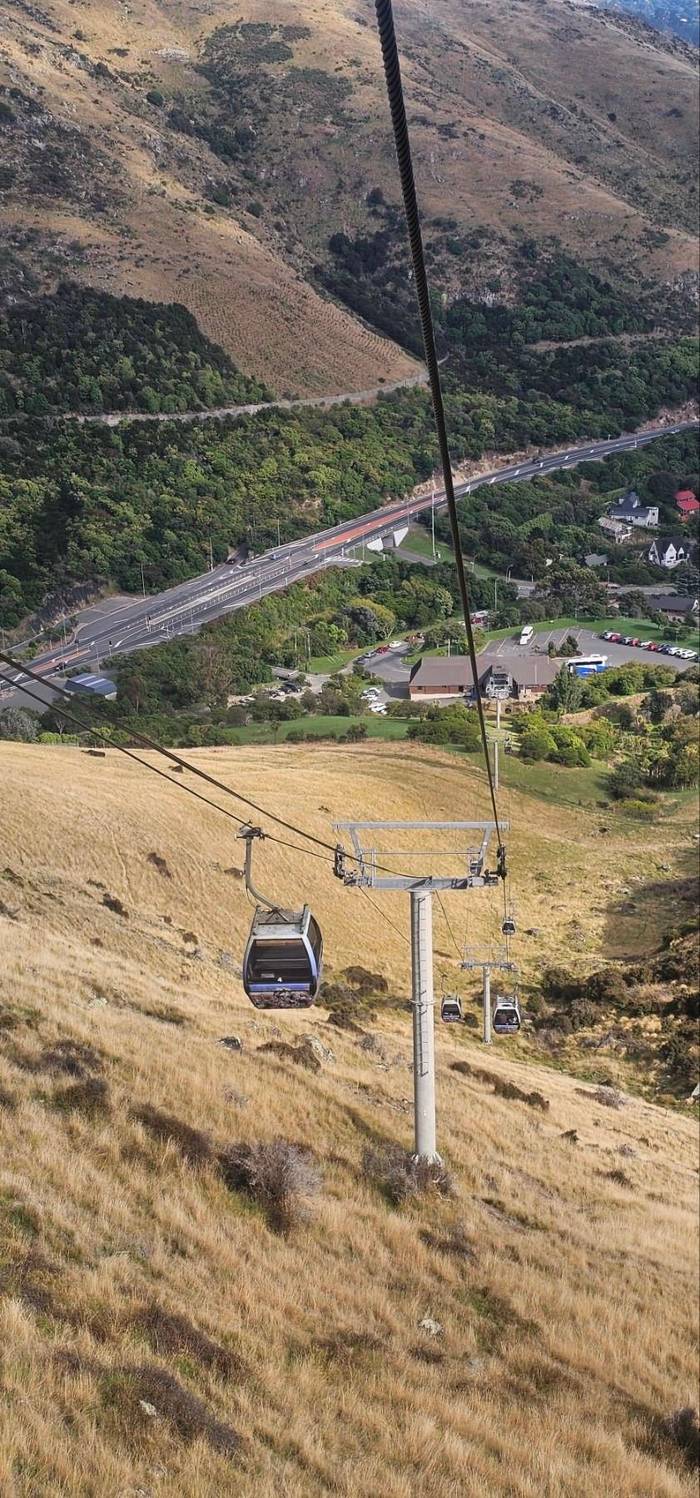
Gondola only
Gondola ride
Return trip to the summit
- CoversReturn ride
- ArriveAny time in opening hours
- TransportNot included
Pick-for-me guide
Short answer
A gondola works by hanging cabins from a steel rope that a station drive keeps moving in a loop, carried over towers on sheave assemblies; on the Christchurch Gondola, cabins for four climb 852 horizontal metres in around 10 minutes.
The machine
Two taps to a ticket
Say how much of Christchurch you want to see besides the gondola, and a matching listing appears with its from-price.
The one for you
from $26
A return ride to the summit, used any time in opening hours, rated 4.62 from 472 reviews.
The one for you
from $48
Gondola entry plus a day of hop-on tram travel, rated 4.57 from 837 reviews.
The one for you
from $72
All three on one ticket, not necessarily on the same day, rated 4.71 from 675 reviews.
How does a gondola work, and what keeps the cabins moving up Mount Cavendish? This guide explains the rope, the towers and the cabins, then tells the story of the Port Hills gondola from its planning years to its reopening after the earthquakes.
Editorial team, christchurchgondola.top · Updated November 8, 2026 · 6 mins to read
How does a gondola work? At heart it is a loop of steel rope stretched between a station at the bottom and a station at the top, held up along the way by towers. A motor in one station turns a large wheel that keeps the rope moving in a continuous circuit, and the cabins ride on it, up one side of the loop and down the other.
The towers do more than hold the rope in the air. Each carries sets of grooved wheels called sheaves, and the operator explains that the sheave assemblies on every tower support the cable and also hold it down.6 That second job matters on a hillside, where the rope wants to lift off the towers as the slope changes beneath it.
The cabins themselves are simple. Each hangs from an arm with a grip on the rope. On some systems the grip lets go in the stations so the cabin can creep along a rail while people board, then clamps on again; on others the whole line runs slowly enough to step in and out. On the Christchurch line the operator can briefly stop the ride for anyone who needs help getting in or out, including people in manual wheelchairs.7 It is a quiet, steady system, closer to a ski lift than to a train.
Compared
| Type | Example | How it moves | Ride |
|---|---|---|---|
| Gondola | Christchurch Gondola | Cabins on a moving rope | Around 10 minutes |
| Funicular | Wellington Cable Car | Cars on rails, passing loop | 3-5 minutes |
| Chairlift | Adventure Park lift | Open chairs, bikes carried | 1.8 kilometres long |
From the gondola operator, Wellington Cable Car and the Christchurch Adventure Park.1,19,17,18
The cabins on Mount Cavendish hold up to four people each, and every cabin travels 852 horizontal metres to the top, a trip of around 10 minutes.1 The operator adds that the ride averages about 10 minutes, but at top speed it could take 4 minutes 30 seconds.14 Running slower than the maximum gives everyone time to take in the view.
Capacity is set by how many cabins pass the loading point each minute. By the operator's figures, the line can lift up to 440 people an hour from the valley to the summit.2 On busy cruise ship days and between 26 December and 10 January, that limit shows up as queues at both stations.15
The doorways set the access rules. Manual wheelchairs no wider than 600mm fit through the cabin door.16 The whole system runs on electricity: the operator lists the gondola among its electric-powered attractions and says it uses an electricity provider offering 100% renewable energy.3,4
A gondola is only as reliable as its towers, and they are serviced on a long cycle. A release from the operator describes a 10-yearly schedule that checks and replaces the main axles and bushes in the sheave assemblies on each tower.6 It is slow, careful work on parts that carry the whole load of the line.
The work normally happens out of sight. The same release says it is usually done outside operating hours and often at night.20 During one closure the team used the daylight hours instead, and towers near the summit needed a helicopter to lift the sheave assemblies down for the engineers and fly them back up.13
Weather is the other daily factor. Metro warns bus 8 riders that in rough conditions the cabins may stop before closing time or not start at all, and the stop at the base station is then out of use.21 On a gusty day, check the operator's updates before you travel, and keep a backup plan in the city.
Ride it
Gondola only
Return trip to the summit
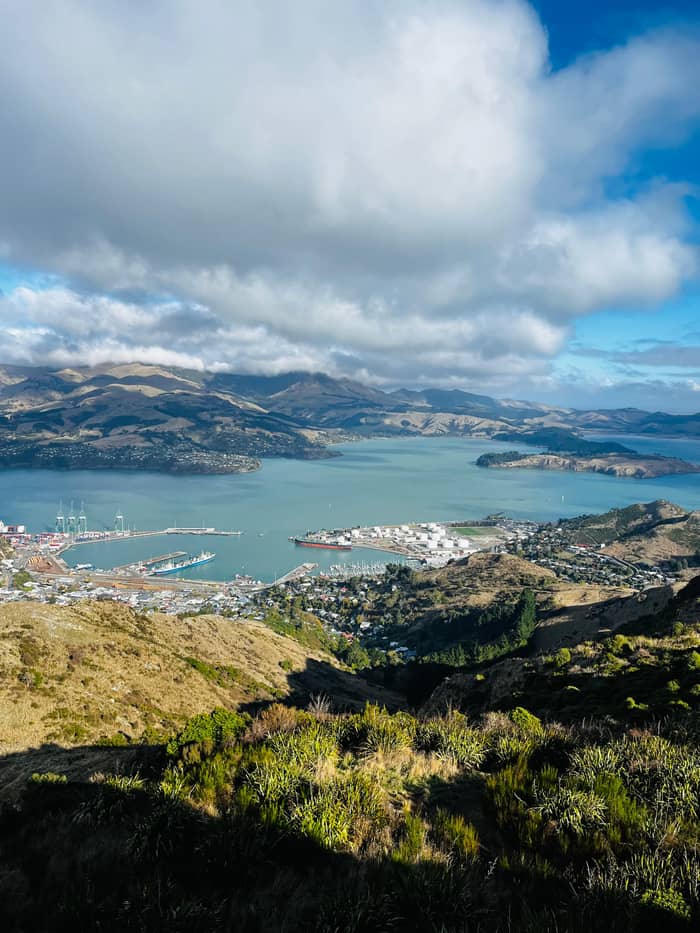
Combo
Hills and city center
Pass
Tram, river and hill
The gondola took a long time to arrive. The operator's anniversary release says planning had been under way for 20 years before construction began, and that once the building was finished, 16,000 native tussocks were put back on the site.8 Its Scan & Learn page adds court battles, public polls and a construction bill of NZD 11.5 million to the story.26
So when did the Christchurch Gondola open? The operator's FAQ and its anniversary release both give 24 November 1992, when it opened as the Mt Cavendish Gondola.5,9 The Scan & Learn page gives 24 October 1992 instead, so the operator's own pages disagree; the 24 November date is the one in its FAQ and anniversary release.26
Ownership changed hands in 2005, when the local owners and operators The Wood Scenic Line bought it.10 The same family group runs the city tram, punting on the Avon and the Tramway Restaurant, and its records date the tram to 1995 and punting to 1986.27,28 The gondola celebrated 30 years of operation in November 2022.29
The gondola's story
Before building
20 years of planning before construction.8
Opening day
Opened on 24 November 1992.9
New owners
Bought by local owners in 2005.10
Earthquake
60,000 litres of water in the building.11
Reopening
Reopened in March 2013.12
Maintenance
Summit towers serviced with a helicopter.13
The earthquake of 22 February 2011 hit close to home: the operator's guide records a magnitude 6.3 quake near Lyttelton at a depth of 5 km that caused 185 deaths.30,31 At the gondola, RNZ reported that the quake burst sprinkler heads and flooded the building with 60,000 litres of water, and left the surrounding hills dangerous with loose rock.11
Repair meant more than fixing the building. RNZ reported that the building was renovated and the cabins upgraded, with the managing director putting the cost at about NZD 2 million.32,33 Fences designed to catch falling rocks were built around the gondola buildings.34 A later RNZ report put spending on the fences and renovation at more than NZD 1 million.35
The Christchurch Gondola earthquake closure ran from February 2011 until March 2013.11,12 RNZ's report of 25 March 2013 says it had reopened that Monday after the long repair.36,37 The Bridle Path below the cabins stayed closed a little longer while the council cleared hazardous rocks.38
Video
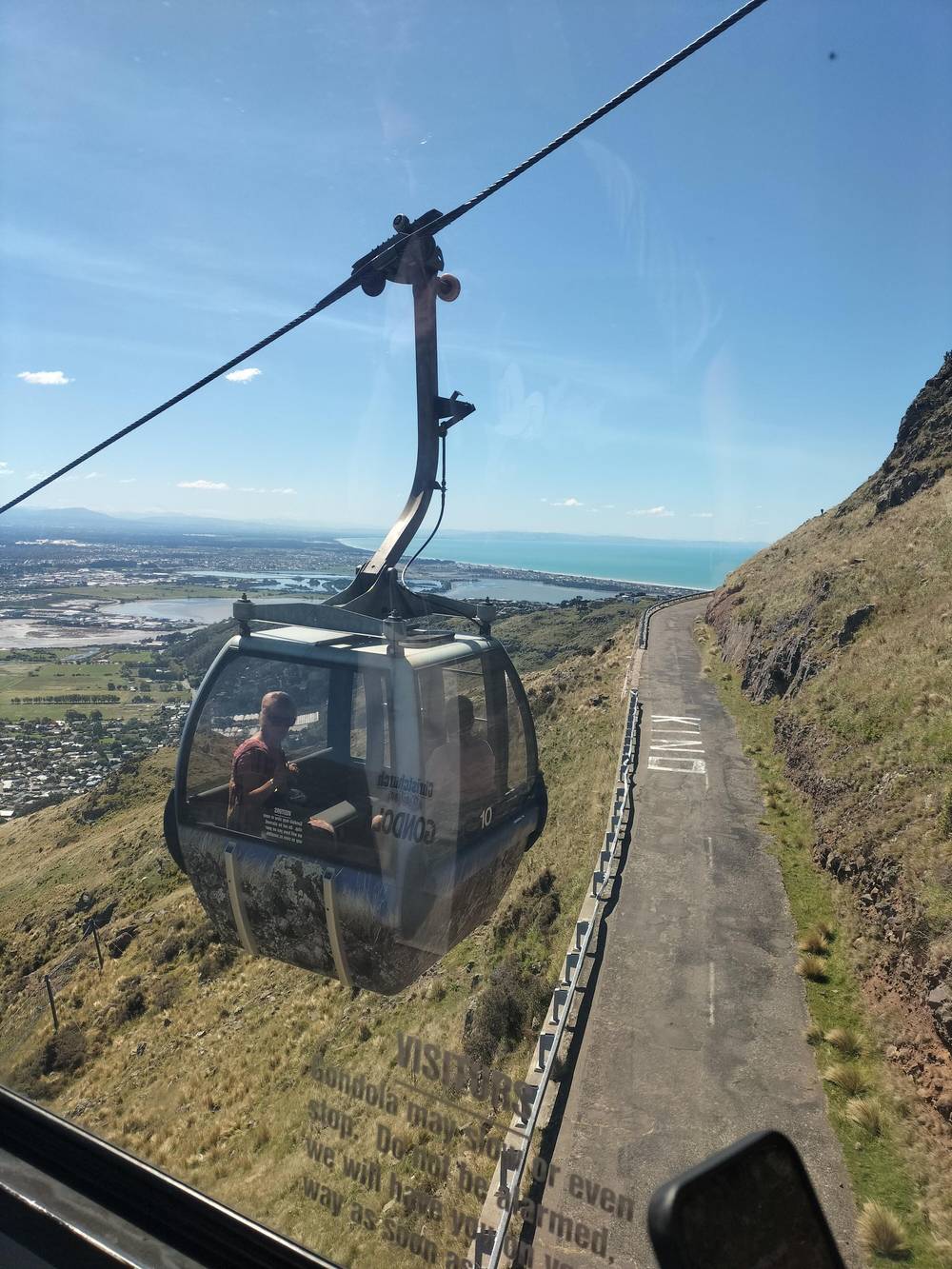
Sandro Here on YouTube · The clip loads only after you tap play.
The 10-yearly tower maintenance schedule involves checking and replacing the main axles and bushes in the sheave assemblies
Ride checklist
People search for a Christchurch cable car, and the words do overlap. ChristchurchNZ itself calls the gondola a cable car that takes you to the top of Mount Cavendish.39 Strictly, though, a gondola hangs cabins from a moving rope above the ground, while a classic cable car of the funicular kind runs on rails and is pulled up a slope.
Wellington's red cars show the difference. The Wellington Cable Car is a funicular, built in 1902, whose track is 609 metres long and climbs to an altitude of 119 metres at 4 metres per second, taking 3-5 minutes.40,17 Its cars bypass each other on a passing loop.19
The Port Hills also have a chairlift. At the Christchurch Adventure Park, a 1.8 kilometre chairlift carries riders and their bikes.18 After a wildfire on 13 February 2017 the park was closed for 10 months, and the haul rope on that lift was replaced, which shows how central the rope is to any of these machines.41,42
Knowing how the system works makes the ride more interesting. Watch for the towers as you climb, each one carrying its row of sheaves, and notice the gentle bump as your cabin passes over them. At the top, take a moment on the platform to look back down the line you have just climbed.
Plan your timing around the operating rules. Cabins run 10am-5pm daily in summer and 10am-4pm in winter, and you can still ride down for 60 minutes after closing.22 The summit café, history ride and shop close 30 minutes before that last ride.24
If you want to see the machine at work rather than just ride it, stand at the edge of the deck on Level 4, where the cableway drops away toward the valley and the walking tracks start beneath it.23 From there you can watch cabins pass in both directions and follow the rope down to the base station in Heathcote Valley.43
FAQ
A rope loop driven at a station carries the cabins; on each tower, sheave assemblies support the cable and hold it down.6
Each cabin seats up to four people.1
At top speed it could take 4 minutes 30 seconds.14
RNZ reported 60,000 litres of water from burst sprinklers and loose rock on the hills.11
The schedule replaces axles and bushes in the sheave assemblies on each tower.6
Sources
Planning a ride up the Port Hills? A real person answers here.